


Your Home Is Working on You. Is It Working for You?
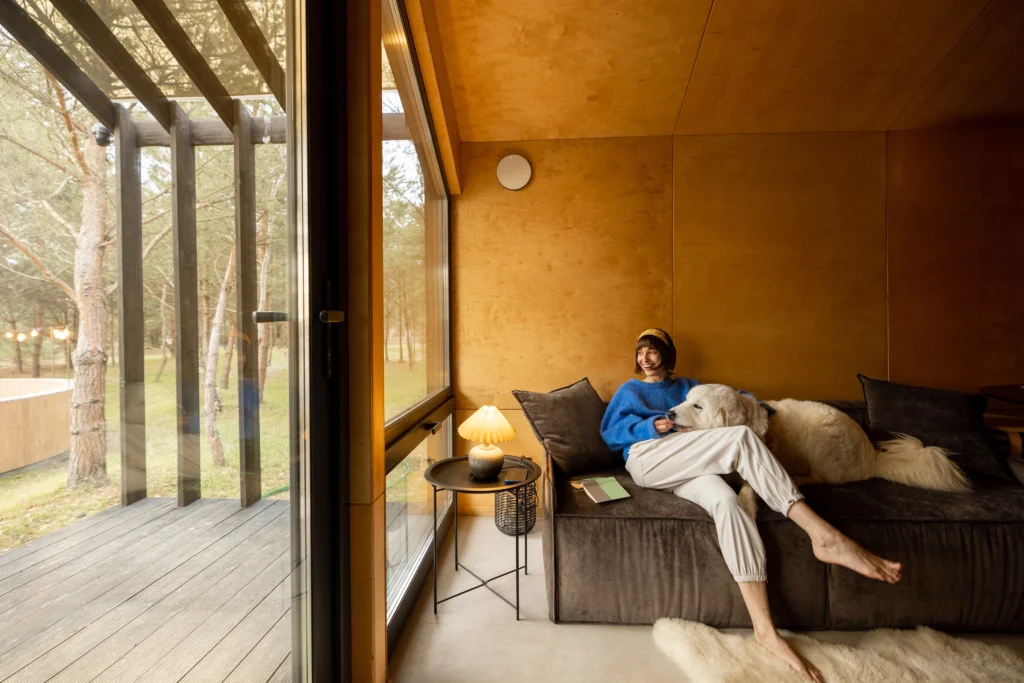
A home can look calm and still feel demanding
This is the distinction at the heart of environmental wellbeing.
A bedroom with bright overhead lighting, a screen on the wall and a laptop on the chest of drawers sends a very different message from one with softer evening light and fewer visual cues.
A home office with poor lighting, paperwork in the periphery and household activity just beyond the door asks more of your attention than a space with clear boundaries.
A beautiful home can work against you in quieter ways:
- Open plan without intention. Work, conversation and rest all happen in the same space, without clear boundaries or places to retreat.
- Materials used without balance. Cold stone, high-gloss finishes and hard surfaces can make an otherwise beautiful space feel hard, echoing or impersonal.
- A home that feels like a hotel. A hotel can be designed to impress, restore or inspire. But it is designed for a stay, not the rhythms of everyday life. Your home should do more than create an experience. It should support the way you live.
- Too little sensory variation. When everything is visually uniform, a room can look calm while feeling flat and disconnected.
Calm is not the absence of stimulation. It is the right amount, in the right form, for the person living there.
There is no single correct way to arrange a home.
The more useful question is: what is your environment currently asking of you, and does that match how you want to live?
Sleep: it starts well before bedtime
Sleep is influenced by many factors, and your home is only one of them. But your surroundings can either support the transition into sleep or quietly work against it.
Light is one of the most powerful environmental signals. Natural light during the day helps reinforce the body’s internal clock, while bright, stimulating light in the evening can work against the shift towards rest.
This does not mean living in the dark. A well-supported home delivers the right light at the right time: brighter and more stimulating while you are active, progressively softer as the evening develops.
It is about the distribution and timing of light across the home, not simply the lighting in the bedroom.
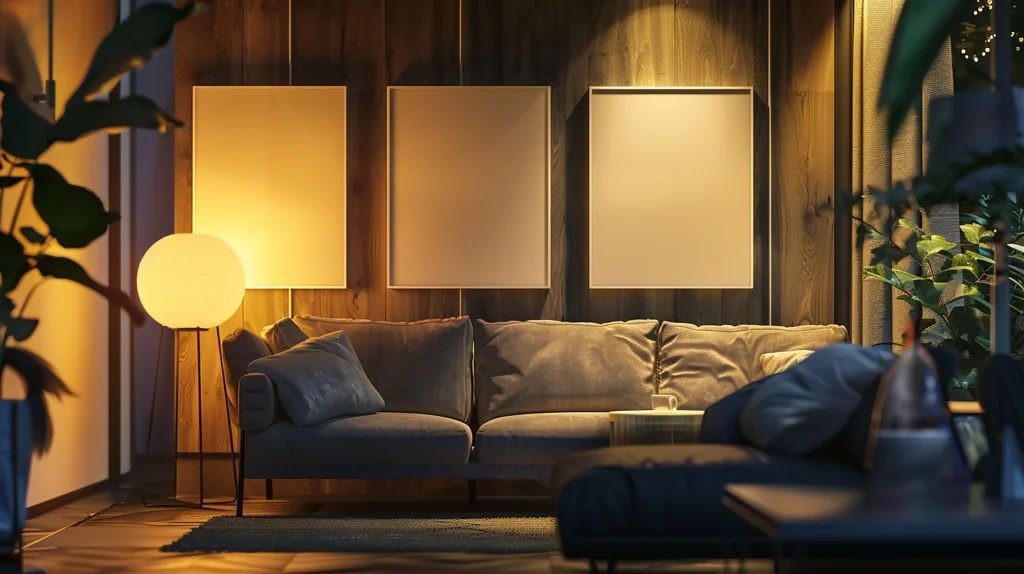
The same applies to sensory cues. A bedroom that also functions as an office, dressing room and entertainment space can make it harder to create a clear psychological transition from daytime activity to rest.
The aim is not to make the bedroom empty. It is to make its purpose clear.
Stress: when every room does everything
A home should offer room to recover as well as room to function. Yet in many homes, the two have gradually collapsed into one.
A study has a television. A bedroom has a desk. Household admin sits beside the sofa. Work follows you from room to room, and screens are everywhere.
When every space supports everything, it becomes harder to recognise when it is time to switch off.
This is also about sensory load: visual clutter, background noise, strong contrasts, too many objects or too many competing activities. In larger homes, even generous spaces can feel demanding when hard surfaces, movement, sound and visual information are constantly competing for attention.
More space and finer materials do not automatically mean less stimulation. What matters is whether the level of stimulation suits the person using the space.
Recovery can come from relatively simple decisions:
- A comfortable place to sit without a screen
- A defined retreat with no work function
- Reduced evening stimulation in the bedroom
- A clearer separation between work and leisure
- Access to daylight, nature or an outdoor view
The aim is not a home that looks calm. It is a home that is easier to inhabit.
Focus: the problem of visual competition
The conditions that support recovery are not necessarily the ones that support concentration.
Focus has its own requirements: natural light, suitable task lighting, comfortable positioning and a clear workspace all help.
But one of the most overlooked factors is visual competition.
When your attention is surrounded by unfinished tasks, paperwork, objects and notifications, your workspace becomes another source of cognitive demand.
For founders, executives and anyone whose work depends on sustained, high-quality thinking, that quiet drain is worth taking seriously.
The answer is spatial clarity, which is not the same as minimalism. It means a space that makes its purpose obvious:
– A workspace should make it easy to begin.
– A bedroom should make it easy to wind down.
– A living area should let you relax, rather than remind you of everything left undone.
When the physical environment reinforces the intended activity, the space feels intuitive — and you spend less energy managing it.
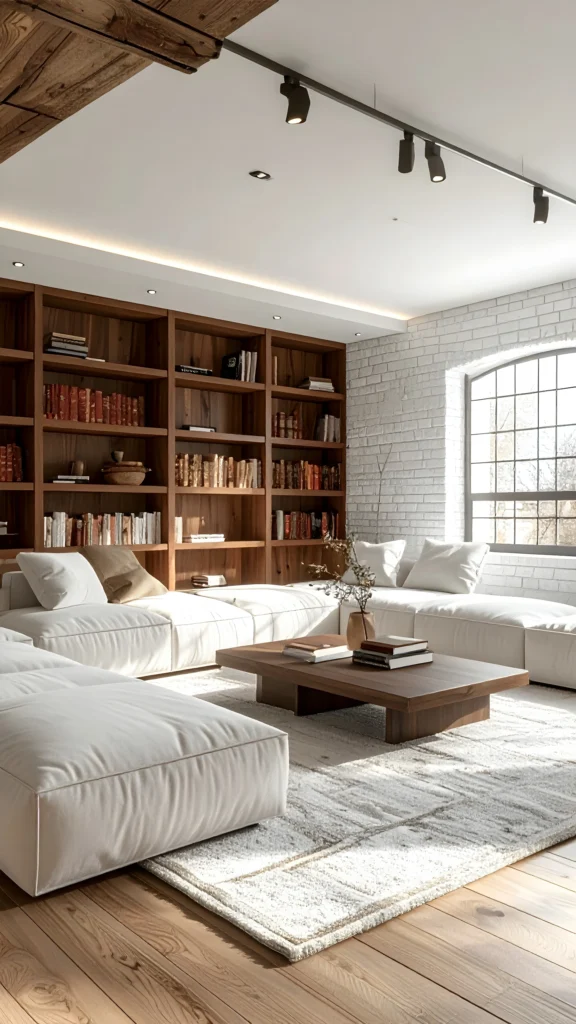
Restorative spaces consider not just appearance, but light, sensory cues and the transition between activities.
Nature: more than a plant in the corner
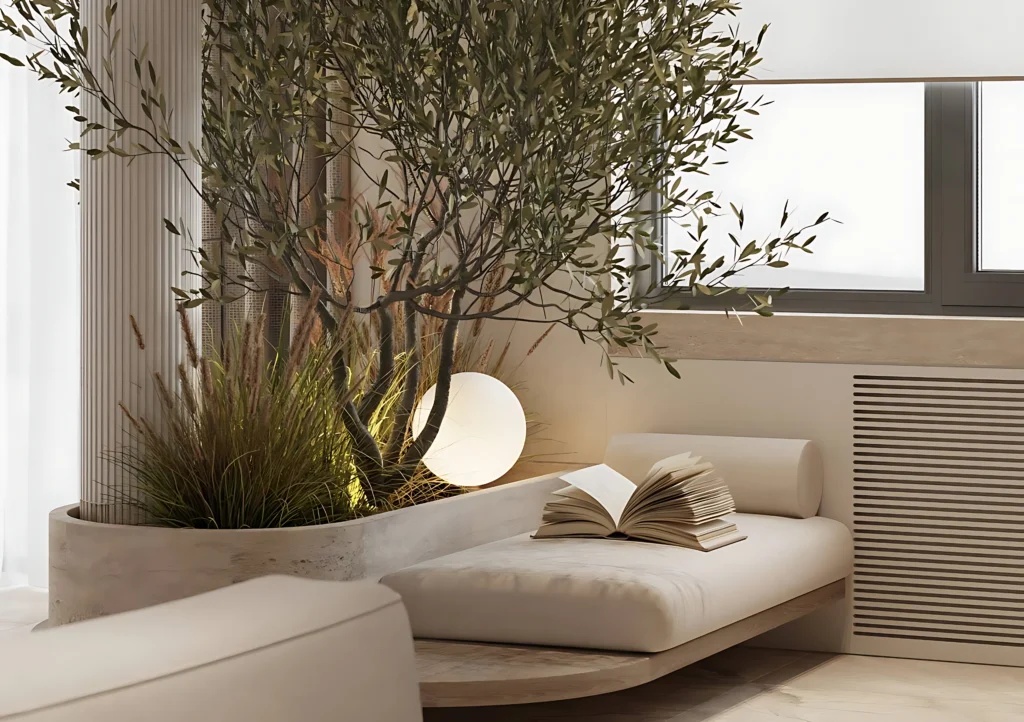
Biophilic principles explore how our connection with the natural world can be strengthened within the built environment.
It goes far beyond adding houseplants.
Daylight, views of greenery, natural materials, organic forms, texture, variation and connections to outdoor space can all contribute to the sensory experience of a home.
The point is not to create a biophilic style. It is to introduce nature in ways that suit the home and the person living in it.
This is where quiet luxury and wellbeing can meet. The most refined spaces are rarely the loudest. They are the ones where light, materials, texture and proportion work together so well that the room simply feels right.
There is no perfect home. Only the right one for you.
What supports one person may unsettle another.
Someone who finds visual stimulation energising may thrive in a richly layered space. Someone who becomes easily overwhelmed may need more simplicity.
The same is true of colour, materials, lighting, layout and nature.
This is why environmental wellbeing should begin with assessment, not assumptions.
Instead of asking: “What should my home look like?” ask: “What do I need my home to help me do and feel?”
That shift moves the conversation away from trends and towards function, experience and individual need.
Six questions to ask of your own home
You do not need to redesign anything to begin.
Walk through your home this week and ask:
- Which areas genuinely support rest?
- Where does your attention get pulled away?
- Where do you feel most at ease?
- Which rooms feel overstimulating?
- How does natural light move through the day?
- Are there clear transitions between work, activity and recovery?
And perhaps the most revealing question:
Does your home reflect the way you actually live, or the way you originally intended to live?
Diagnosis before design
At Lusitage, the starting point is the home as it is, not a mood board. Lusitage is a home wellbeing consultancy that looks at how light, sensory stimulation, spatial organisation, materials, nature and visual balance may be shaping your daily experience, then develops evidence-informed recommendations to help your existing home work harder for you.
No full renovation required. It begins with a Home Environmental Audit: an assessment of your home and lifestyle to identify what is supporting you and what may be quietly getting in the way. From there, a Biophilic Performance Strategy and, where appropriate, detailed Room-by-Room guidance can provide a clearer direction.
Your home cannot solve every source of stress, perfect every night’s sleep or guarantee better concentration. But it can support your routines — or create friction within them.